
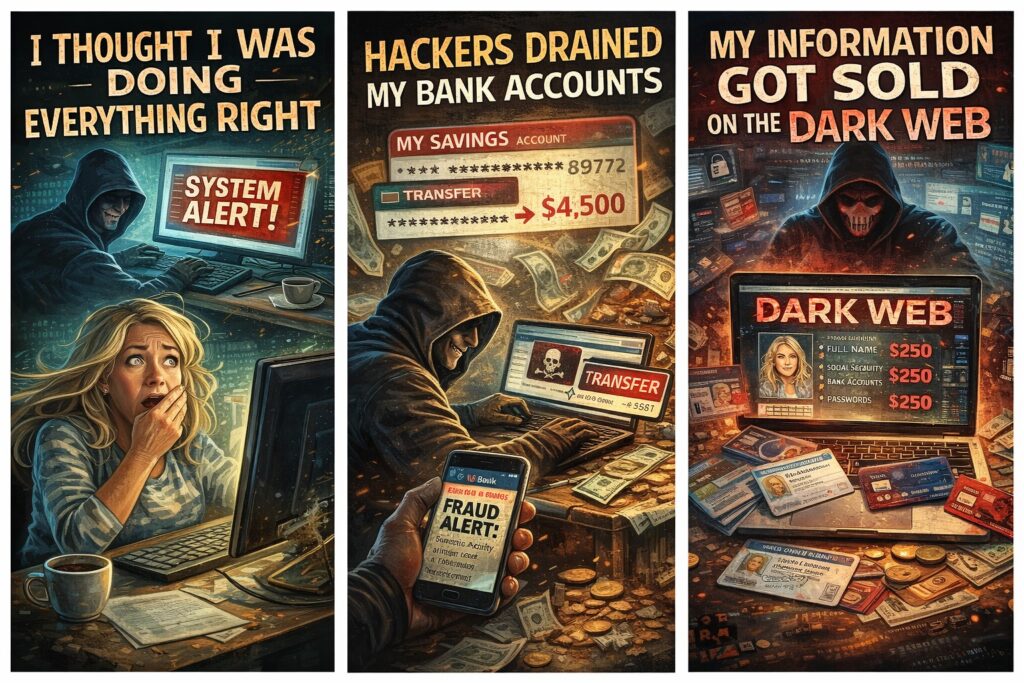
Then I Found My Information for Sale on the Dark Web.
It all started right before the Colorado Motorcycle Expo.
 I was working on my desktop when a blue alert screen suddenly appeared. At the same time, I watched my mouse begin moving on its own. That moment shifts something in you. I immediately hit Control–Alt–Delete, forced a reboot, and ran a deep Norton scan. It completed without showing anything catastrophic. Then it happened again. Blue screen. Moving cursor. Again I rebooted. Again I scanned. Then it stopped. I had an event to get through, so I convinced myself it was a glitch and moved on.
After the Expo, my credit union contacted me about an auto-pay issue. I logged in to check my Hummer payment balance, and that’s when I saw it — $4,500 missing from my savings account. A new transfer account had been added that I didn’t recognize. I drove straight to the bank, changed my login credentials, and disputed the transfers. I believed I had handled it quickly enough.
A few days later, I tried logging into my US Bank account. It wouldn’t let me in. I assumed it was a system issue. I tried again the next day. Still locked out. On Sunday, I called and heard a recorded message saying they were aware of login problems. I still didn’t panic. On Monday, when I called again, I was transferred immediately to the fraud department. That was the moment everything became real. I was told my accounts had been screen-shotted and that my personal information was being sold on the dark web.
That phone call launched nearly five straight days of damage control.
 I opened new bank accounts, replaced every credit card, froze my credit, and contacted every company tied to auto-pay. I took my desktop to Geek Squad for a complete wipe. Then I transitioned to a new laptop, upgraded to Microsoft 11, and began rebuilding my digital world from scratch.
Upgrading wasn’t as simple as turning on a new computer. I had to reinstall all my software and reconfigure more than 20 tools I rely on every day — Facebook, Instagram, NeonCRM, YouTube, my video creation software, financial platforms, and business systems. Every login had to be reset. Every authentication method had to be rebuilt. Every integration had to be tested.
It wasn’t just a computer reset. It was a complete operational rebuild.
I’m almost 63 years old. I consider myself computer literate. I run security software. I scan my systems. I believed I was doing everything right. But I also have to admit something: I could not realistically remember 47 different passwords. So I did what many people quietly do. I had one to three strong passwords that I rotated and reused. They weren’t simple or obvious, but they were reused. My children even knew that in an emergency, they could probably access most of my accounts using one of those core passwords.
It felt practical.
In today’s cybersecurity environment, it was a vulnerability.
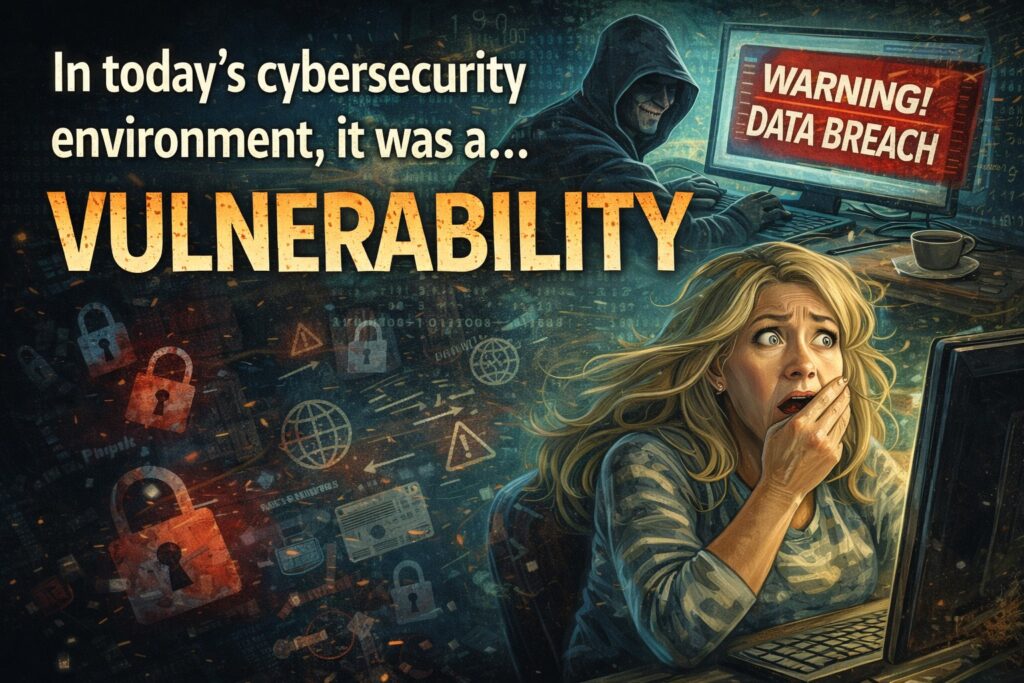 When one company experiences a data breach — and thousands do every year — criminals use automated tools to test those same email and password combinations across banks, retailers, social media platforms, and financial institutions. It’s called credential stuffing, and it works because so many of us reuse passwords. What feels manageable becomes exploitable at scale.
I also learned something about infrastructure. I had been running Windows 10 on an older desktop. I assumed that because my antivirus software was active and I was running scans, I was protected. What I didn’t fully appreciate is that as operating systems age, their security architecture becomes outdated. Newer operating systems include stronger built-in protections, hardware-based security features, and updated frameworks that older systems simply don’t have. Third-party security software can only do so much if the foundation underneath it is aging.
Your operating system is the base layer of your digital security. If that base layer is weak, everything sitting on top of it is less effective. Security software cannot fully compensate for outdated infrastructure.
There is an emotional cost to this kind of violation. There is embarrassment. There is self-doubt. You replay every click and wonder what you missed. But cybercrime today is industrialized and automated. It does not only target the careless. It targets the connected. And all of us are connected.
The question that kept replaying in my head every night after working twelve-hour days trying to fix everything was simple: Why me?
Why did this happen to me? I thought I was careful. I thought I was informed. I thought I was protected. After several sleepless nights, the answer shifted.
Why not me?
Why do criminals do this? Because they can. Because it’s automated. Because it’s profitable. Because millions of people believe it won’t happen to them.
If you are reading this thinking, “That wouldn’t happen to me,” I hope you pause and reconsider. I thought the same thing.
Upgrade your systems. Lock down your passwords. Freeze your credit. Ask questions. And if you are unsure about your technology, get professional help. Taking my computer to Geek Squad and investing $189 a year for professional oversight has been one of the smartest investments I’ve made. It’s far less expensive than rebuilding your financial identity.
The internet is not getting safer. But you can become harder to exploit.
Security is not a product you buy once and forget. It is a system you maintain.
I learned that the hard way.
If sharing this experience prevents even one person from asking better questions or taking action sooner, then the days I spent rebuilding will have served a purpose.