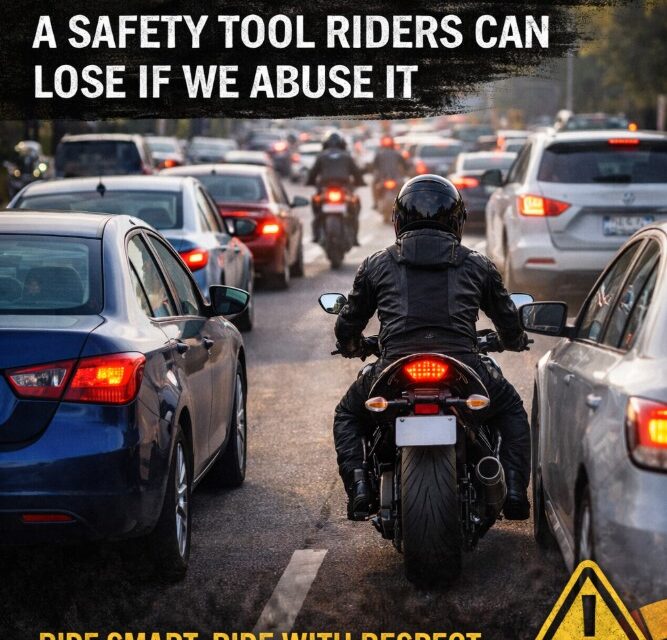
Lane filtering exists for one reason: keeping motorcyclists alive in stopped traffic.
It was never meant to be a shortcut, a flex, or a group maneuver. As more states begin to legalize lane filtering, riders are at a crossroads. How we use it now will determine whether it remains a safety option—or disappears under public pressure.
This isn’t written for drivers or lawmakers. It’s written by a rider, for riders, because we’re the ones living with the consequences.
Why lane filtering exists in the first place
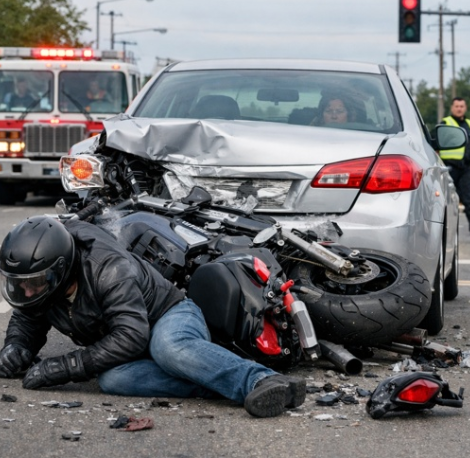
Motorcycles are uniquely vulnerable when stopped in traffic. We don’t have airbags, steel frames, or bumpers protecting us from distracted drivers. Sitting still at a red light, watching mirrors for the car that may or may not stop, is one of the most helpless positions a rider can be in.
Lane filtering was created to:
- Get riders out of the rear-impact danger zone
- Improve visibility at intersections
- Reduce the chance of being crushed between vehicles
When done slowly and intentionally, filtering can reduce exposure to a risk riders can’t control.
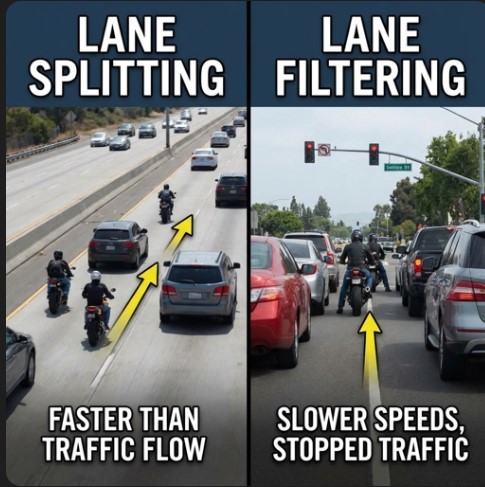
Filtering is not splitting—and confusing the two puts us at risk
This is where things start to break down.
Lane filtering generally means:
- Traffic is stopped or barely moving
- Rider speed stays low
- The goal is safety, not position
Lane splitting usually means:
- Traffic is moving
- Speed differences increase
- Reaction time disappears
When riders split at speed and call it filtering, drivers don’t see nuance. They just see another reason not to trust us.
And trust on the road is already thin.
The driver’s experience matters—whether it’s fair or not
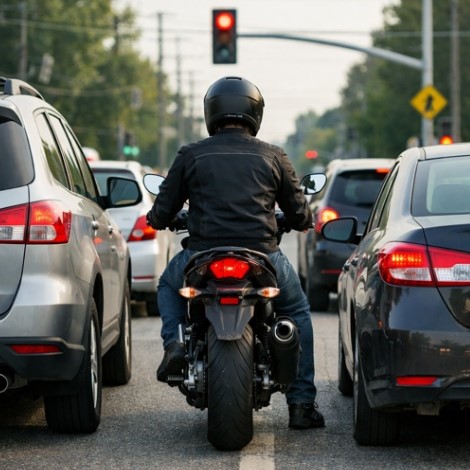
Most drivers were never taught what lane filtering is supposed to look like. To them, a bike suddenly appearing between lanes can feel intrusive or startling. When several bikes do it at once, it can feel overwhelming.
That reaction matters because startled drivers:
- Drift toward lane lines
- Slam brakes
- Block gaps
- Act unpredictably
We don’t have to agree with their frustration to understand the danger it creates.
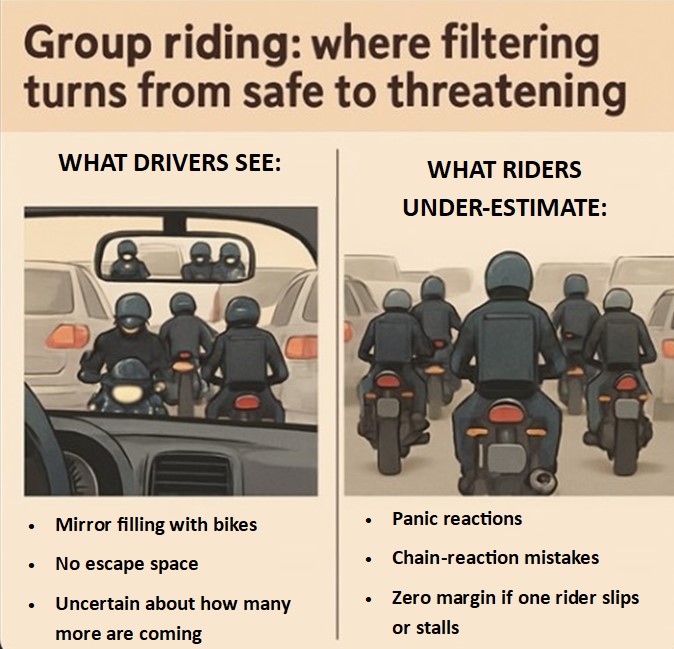
Group riding: where good intentions turn risky fast
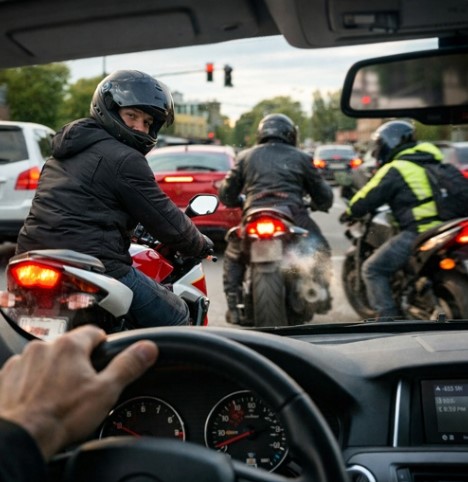
Group riding is where filtering most often goes sideways.
One rider filtering calmly through stopped traffic is manageable. A whole group following automatically is another story.
Common group mistakes:
- One rider filters and everyone follows
- Speed increases to keep the group together
- Bikes stack tightly between mirrors
- Drivers feel boxed in with no space or warning
From the driver’s seat, it doesn’t look like a safety maneuver. It looks like being swarmed.
Panic causes sudden movements. Sudden movements cause crashes.
Smarter group habits that protect everyone
If you ride in groups and want lane filtering to survive:
- Don’t auto-follow the first rider
- Break large groups into smaller units
- Set regroup points beyond intersections
- Accept that not everyone filters every light
- Choose space and control over staying together
The safest groups are the ones that treat filtering as optional, not automatic.
Stunts and racing off the line hurt all of us
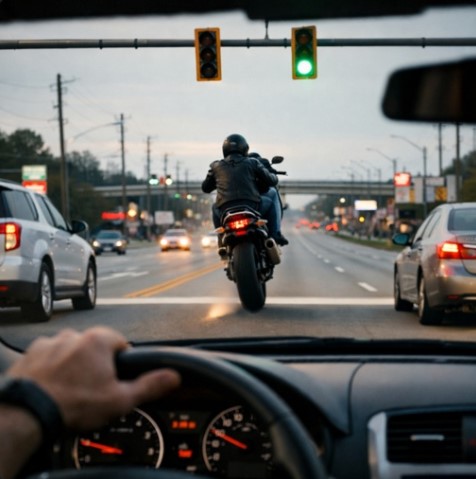
Nothing fuels resentment faster than:
- Wheelies at the light
- Rev-bombing
- Full-throttle launches from the front
- Cutting across lanes immediately after filtering
Even riders who support filtering cringe when they see it. Drivers remember it. Lawmakers hear about it.
A safety tool turns into a spectacle—and spectacles don’t survive public scrutiny.
What the numbers actually say—and why I’m concerned
Most riders didn’t push for lane filtering because they wanted to get ahead. We pushed for it because getting rear-ended on a bike is often catastrophic.
The limited data we have—especially from places like California, where lane sharing has been studied the longest—suggests that riders who filter or split at low speeds are less likely to be rear-ended and may experience less severe injuries in certain crashes. That lines up with what many of us feel intuitively: sitting still in traffic is dangerous.
But here’s the part that often gets lost:
There is no strong evidence showing that lane filtering or splitting eliminates motorcycle crashes overall. Riding is still risky. The data consistently show that risk increases as speed differences increase.
Slow filtering through stopped traffic is one thing.
Fast splitting through moving cars is another.
And when drivers are already frustrated, impatient, or biased against motorcycles, those higher-risk behaviors amplify quickly.
Why rider behavior matters more than ever
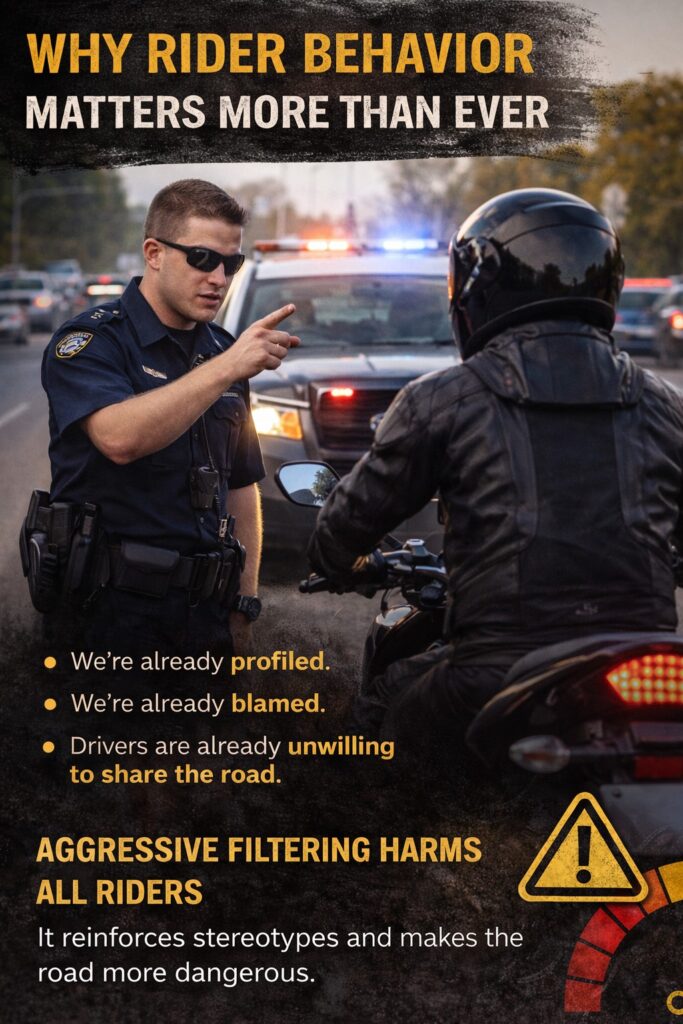
Many lane-filtering laws in the U.S. are still new. In states like Colorado, crash data and public feedback are actively being collected. That means what riders do right now will shape whether filtering stays legal—or gets restricted.
This isn’t about calling riders out or acting superior. It’s about recognizing the environment we ride in.
We’re already profiled.
We’re already blamed.
And too often, drivers are already unwilling to share the road.
When filtering looks aggressive or confusing, it hardens those attitudes—and that makes the road more dangerous for all of us.
A rider’s closing thought
Most riders I know aren’t trying to cause problems. They’re just trying to get home safely. But when filtering turns into something drivers don’t understand or can’t anticipate, it puts every rider at risk—not just the one doing it.
If we want lane filtering to remain a safety option, we should ride in a way that reinforces its purpose.
Slow. Predictable. Purposeful.
Not because we owe drivers anything—but because we owe each other everything.