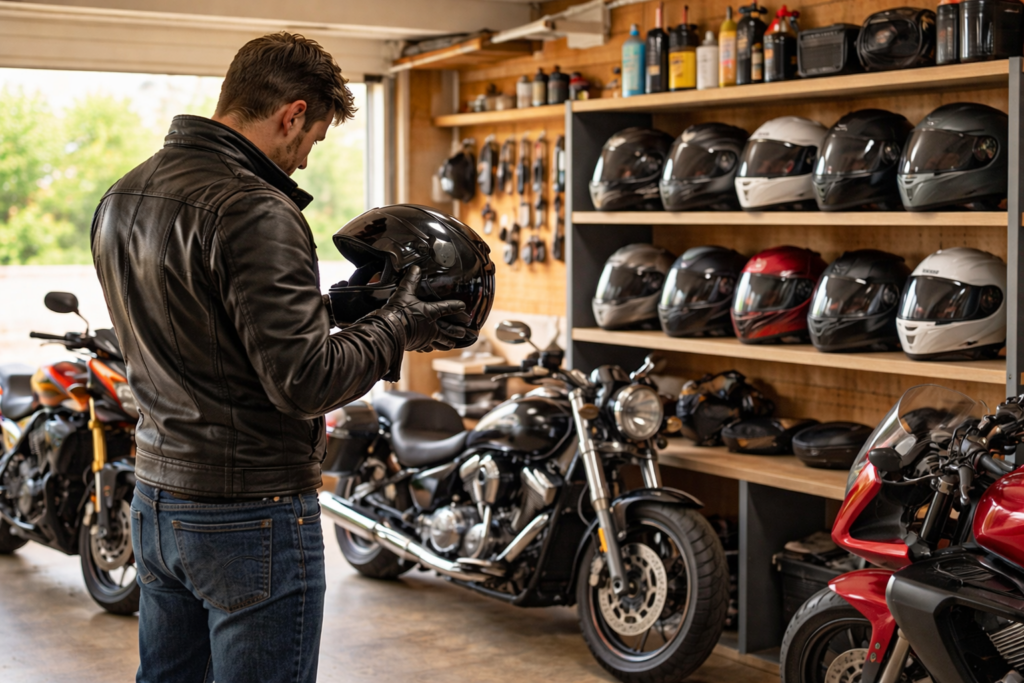
 The sun is starting to peek out, the salt is being washed off the roads, and if you’re anything like me, you’ve been staring at your bike in the garage for weeks, just waiting for that perfect day to hit the asphalt. I’ve been buried in paperwork and foundation business lately, but I wanted to take a breather to talk about something that literally sits on your mind every time you ride: YOUR HELMET.
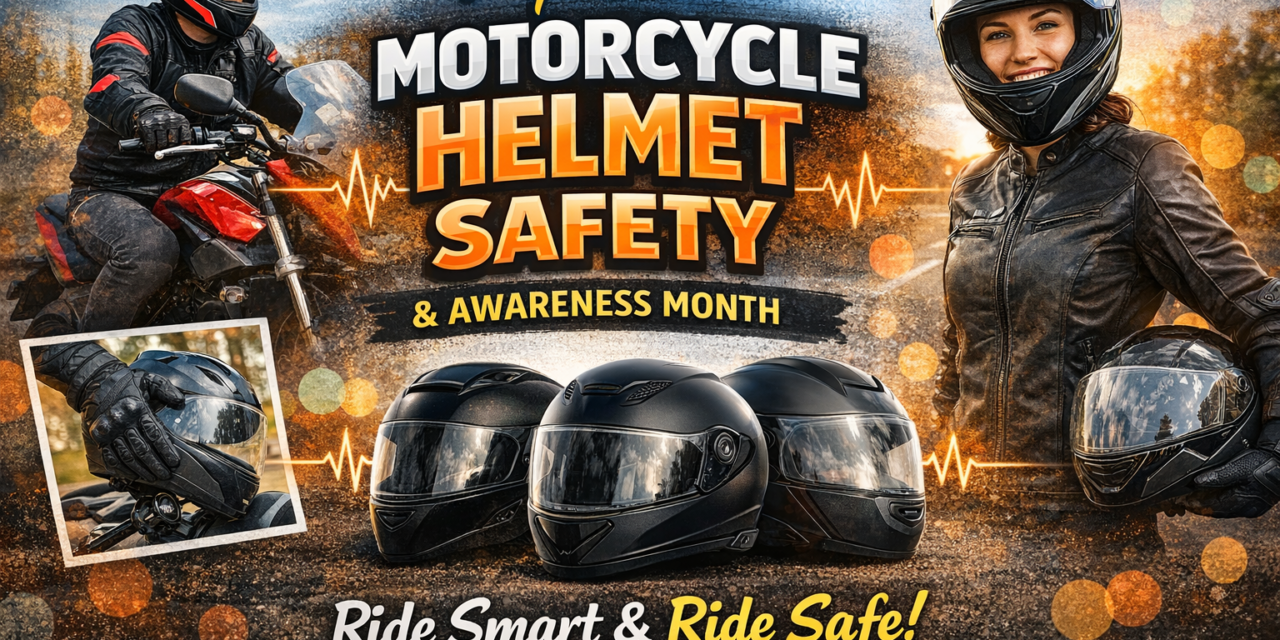
April is officially Check Your Helmet Month, and at BikerDown, this isn’t just another “awareness month” to us. It is a critical window of time to ensure that your gear is actually going to do its job when the rubber meets the road. As a riders charity that spends every single day helping victims of motorcycle accidents, we have seen the difference between a rider who walked away and a downed biker who didn’t: and often, it comes down to the integrity of that lid.
We’d much rather see you at a bike night than in a hospital bed. So, let’s get real about what you need to do right now to make sure your helmet is ready for the 2026 riding season.
Why April? Why Now?
You might be wondering why we dedicate a whole month to this. It’s simple: Preparation prevents tragedy. Most riders are pulling their bikes out of winter storage right now. You’re checking your oil, you’re checking your tire pressure, and you’re cleaning your chrome. But your helmet often gets a “good enough” glance before being buckled on.
As a nonprofit motorcycle organization, BikerDown sees the aftermath of gear failure. We work with motorcycle crash victims who thought their gear was fine, only to have it fail during an impact because of age or hidden damage. April is the time to be proactive. If your helmet is compromised, YOU ARE AT RISK. Period.
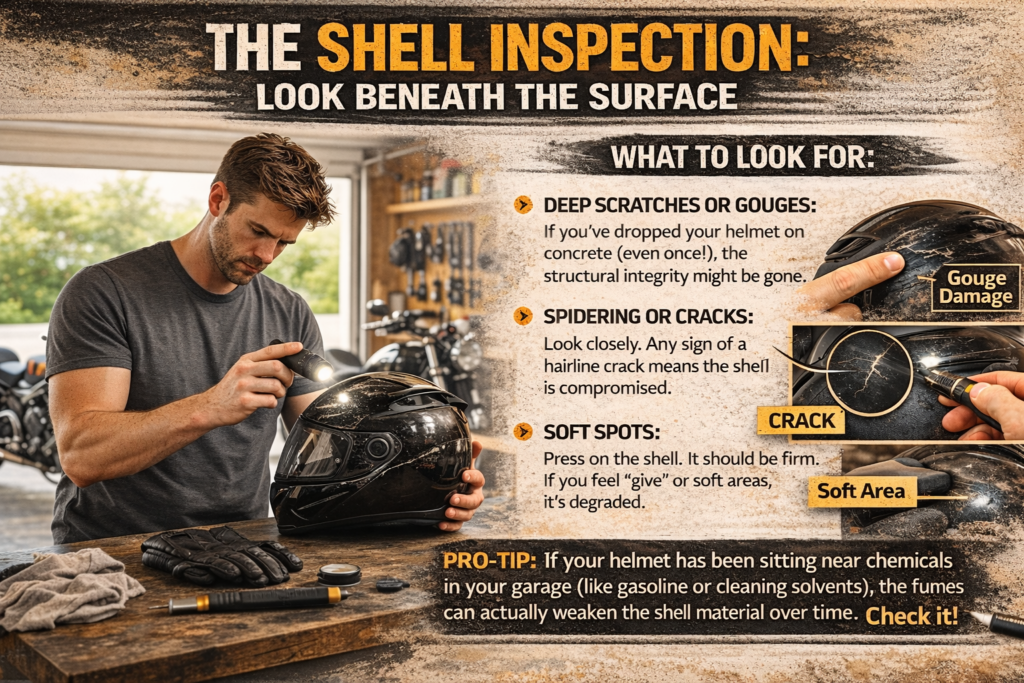
1. The Shell Inspection: Look Beneath the Surface
The outer shell of your helmet is your first line of defense. It’s designed to compress and spread the energy of an impact. But even the toughest shell can’t do its job if it’s cracked or compromised.
What to look for:
- Deep Scratches or Gouges: If you’ve dropped your helmet on the concrete (even once!), the structural integrity might be gone. Helmets are “one-hit wonders.” They are designed to absorb one major impact.
- Spidering or Cracks: Look closely. Use a flashlight if you have to. Any sign of a hairline crack means the shell can no longer distribute force correctly.
- Soft Spots: Press on the shell. It should be firm. If you feel any “give” or soft areas, the fiberglass or polycarbonate has degraded.
PRO-TIP: If your helmet has been sitting near chemicals in your garage (like gasoline or cleaning solvents), the fumes can actually weaken the shell material over time. Check it!
2. The Liner & EPS Foam: Your Brain’s Best Friend
 Inside that hard shell is a layer of Expanded Polystyrene (EPS) foam. This is the stuff that actually saves your life by absorbing the shock so your brain doesn’t bounce off your skull.
How to check it:
- The Compression Test: Remove the comfort liner (the soft padding) if your helmet allows it. Look at the EPS foam. Does it look “crunchy” or flaky? If you press your thumb into it, does it stay indented? If the foam is hard and brittle, or if it doesn’t feel solid, it’s done.
- Degradation: Over time, sweat, hair oils, and heat cause this foam to break down. If you see white “dust” falling out of your helmet, that is your safety barrier disintegrating. STOP WEARING IT IMMEDIATELY.
We deal with hurt bikers every day who tell us, “I didn’t think a little old foam mattered.” Trust me, it matters. It is the only thing between you and a traumatic brain injury.
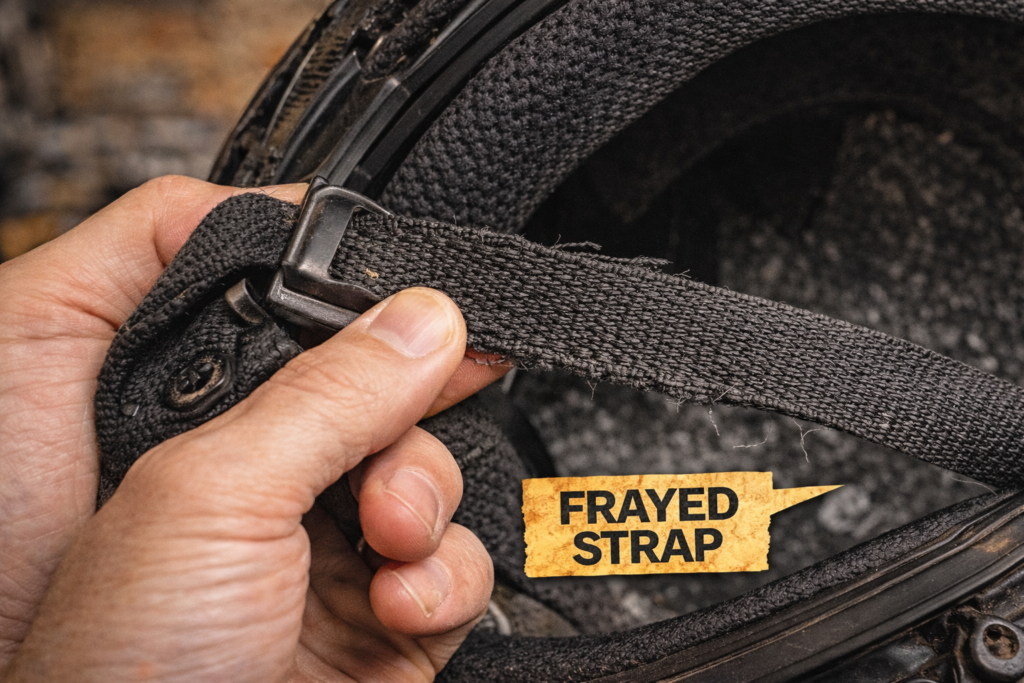 3. Straps and Fasteners: Can It Stay On?
A helmet is useless if it flies off your head the moment you hit the ground. I know it sounds basic, but you’d be surprised how many motorcycle down situations involve a helmet that wasn’t properly secured or had a failing strap.
The Checklist:
- Fraying: Check the chin strap for any signs of wear. If it’s fraying, it can snap under the intense tension of a crash.
- The “Click” Test: If you have a quick-release buckle, click it in and tug on it hard. Does it hold? If you have D-rings, are they rusted or bent?
- Rivets: Check where the strap attaches to the helmet shell. Is there any wiggle room? Is the metal corroded?
DO NOT RISK IT. If your strap is questionable, your helmet is a paperweight.
4. The 5-Year Rule: Respect the Expiration Date
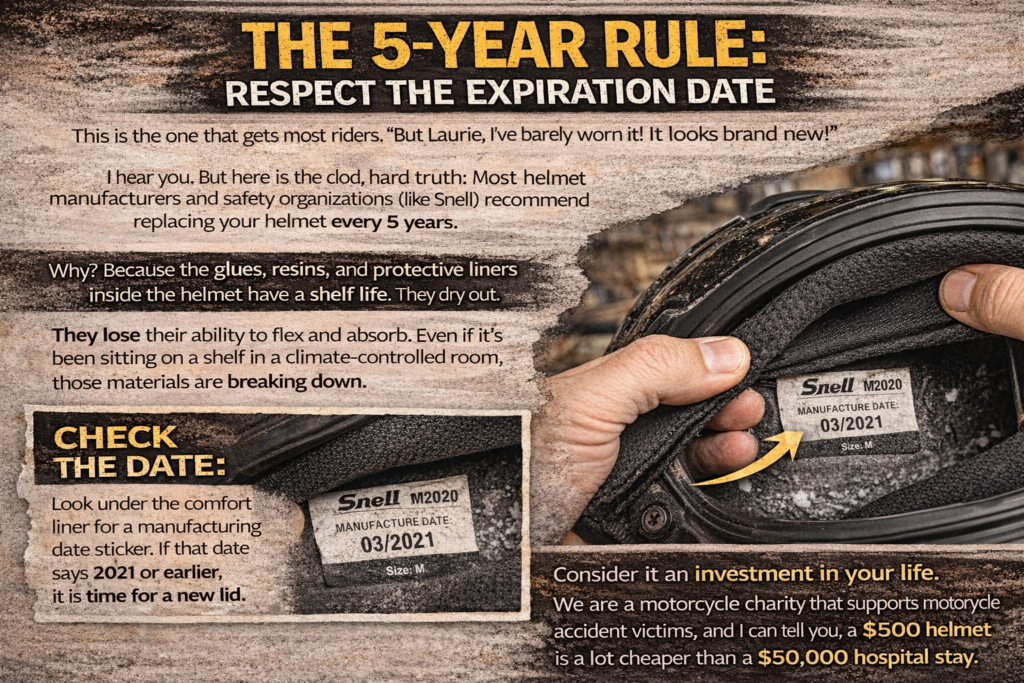 This is the one that gets most riders. “But Laurie, I’ve barely worn it! It looks brand new!”
I hear you. But here is the cold, hard truth: Most helmet manufacturers and safety organizations (like Snell) recommend replacing your helmet every 5 years.
Why? Because the glues, resins, and protective liners inside the helmet have a shelf life. They dry out. They lose their ability to flex and absorb. Even if it’s been sitting on a shelf in a climate-controlled room, those materials are breaking down.
Check the Date: Look under the comfort liner for a manufacturing date sticker. If that date says 2021 or earlier, it is time for a new lid. Consider it an investment in your life. We are a motorcycle charity that supports motorcycle accident victims, and I can tell you, a $500 helmet is a lot cheaper than a $50,000 hospital stay.
5. Visor Clarity: See the Danger Before It Hits You
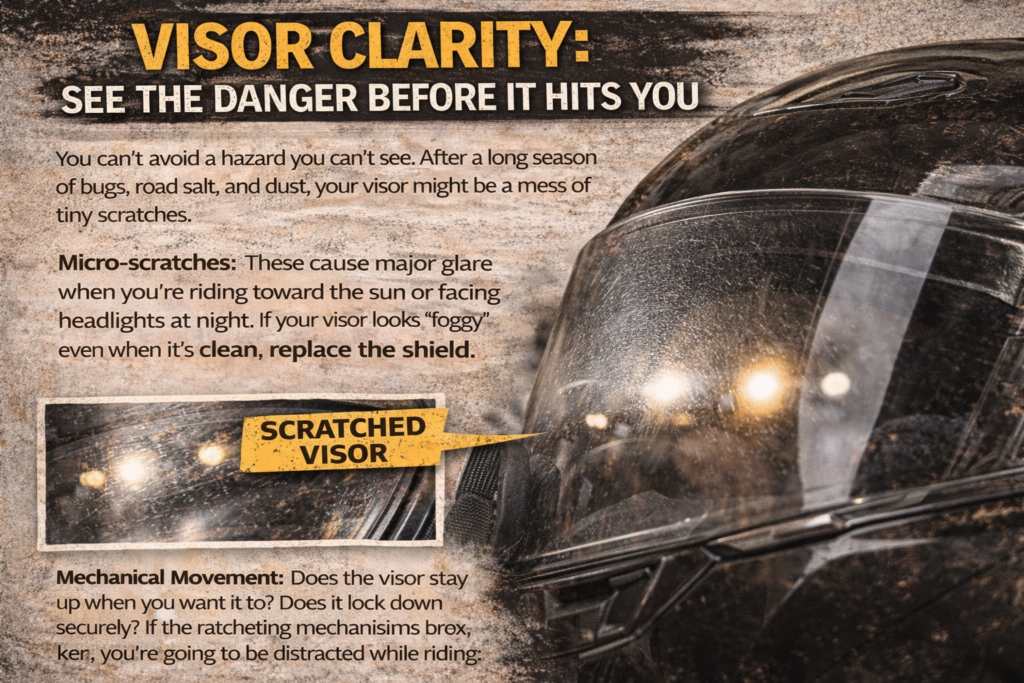 You can’t avoid a hazard you can’t see. After a long season of bugs, road salt, and dust, your visor might be a mess of tiny scratches.
- Micro-scratches: These cause major glare when you’re riding toward the sun or facing headlights at night. If your visor looks “foggy” even when it’s clean, replace the shield.
- Mechanical Movement: Does the visor stay up when you want it to? Does it lock down securely? If the ratcheting mechanism is broken, you’re going to be distracted while riding: and distraction leads to riders down.
BikerDown is Here, But We Want You Safe First

Click here to download the App on Apple store
Look, we love our community. BikerDown was founded to be the safety net for the riding community when things go wrong. We provide help to downed bikers through medical equipment, financial advice, and emotional support. We are proud to be one of the leading nonprofit motorcycle organizations in the country.
But my favorite days are the ones where my phone doesn’t ring with a new accident report.
Safety isn’t about being afraid; it’s about being prepared so you can enjoy the freedom of the ride without the “what ifs” hanging over your head. When you check your helmet this April, you aren’t just following a rule: you’re making a promise to your family and your riding buddies that you’re doing everything you can to come home safe.
One of the BEST ways to stay updated on everything motorcycle awareness and BikerDown is to download our app on your phone.
For Android users:
https://play.google.com/store/apps/details?id=com.createcommunity.bikerdownhelp&pcampaignid=web_share
For Apple App Store users:
https://apps.apple.com/in/app/bikerdown-help/id6757624783
What To Do Next?
Go to your garage right now. Pull your helmet out.
Follow the steps above and be honest with yourself about the condition of your gear. If it’s time for a new one, go get one. Many local shops run “Check Your Helmet Month” sales—take advantage of them. Spread the word. Share this post with your riding group. You might just save your best friend’s life.
If you or someone you know has been involved in an accident, remember that BikerDown is here to help motorcycle crash victims navigate the road to recovery. Visit bikerdown.org to learn more about our mission or to report an accident.
Let’s make 2026 the safest riding season yet. Keep the shiny side up and your head protected!
#CheckYourHelmet #BikerDown #RiderSafety #MotorcycleCharity #SafeRiding #AprilSafety